1/8 Scale Off-Road RC Racing: The Ultimate Beginner’s Guide (2026)
If you want to get into serious RC competition, 1/8 scale off-road RC racing is one of the most exciting places to start. These cars are fast, durable, and built for dirt tracks, jumps, and aggressive driving. Whether you are choosing your first race platform or upgrading your current setup, this guide covers the basics and points you toward the right gear at Truth Motorsports.
What Is 1/8 Scale Off-Road RC Racing?
1/8 scale off-road RC racing focuses on larger, more powerful radio-controlled vehicles designed for rough surfaces and competitive tracks. Compared to smaller classes, 1/8 scale cars offer better stability, stronger suspension, and more speed. That makes them a favorite for racers who want serious performance and durability.
Why 1/8 Scale Is So Popular for Off-Road Racing
There is a reason so many hobbyists move into 1/8 scale once they want more than casual backyard driving. This class gives you the power to clear jumps, the suspension to handle rough landings, and the size to stay planted on loose dirt and technical tracks.
- More power: 1/8 scale vehicles often run brushless systems or nitro engines for strong acceleration and high top speeds.
- Better durability: Heavier-duty drivetrains, shocks, and chassis components help them survive demanding use.
- Track-ready handling: The larger footprint improves stability through corners and over rough sections.
1/8 Scale Buggy vs Truggy
When shopping for your first 1/8 scale off-road race car, you will usually choose between a buggy and a truggy. Both can be fast and competitive, but they drive differently.
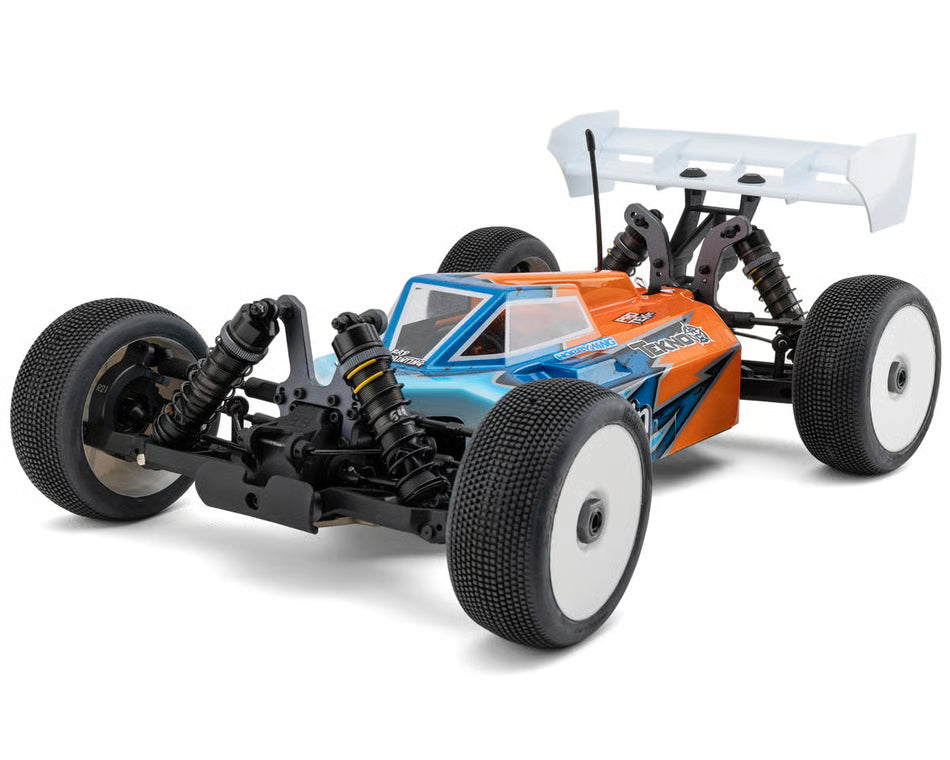
1/8 Scale RC Buggy
A 1/8 scale RC buggy is typically lighter, lower, and more responsive. This makes it a strong choice for groomed tracks and drivers who want quick handling.
1/8 Scale RC Truggy
A 1/8 scale RC truggy usually has a wider stance and larger tires, which helps with stability and control. Many newer drivers find truggies easier to drive because they are more forgiving over rough terrain.
Shop off-road RC trucks and truggies
Electric vs Nitro for 1/8 Scale Racing
One of the biggest decisions in RC racing is whether to go electric or nitro. Both have strong followings, but the best option depends on your experience level and how much tuning you want to do.
Electric 1/8 Scale RC Cars
For most beginners, electric is the easier way to start. Electric RC cars are simpler to maintain, easier to run, and deliver instant power with minimal setup.
- Easy to operate
- Less maintenance
- Quick acceleration
- Cleaner and quieter
Nitro 1/8 Scale RC Cars
Nitro racing adds engine tuning, fuel management, and a more realistic race feel. It can be incredibly rewarding, but it is usually better for hobbyists who are ready for a more hands-on setup.
- Real engine sound and feel
- Refuel instead of recharge
- Advanced tuning options
- Higher maintenance requirements
Must-Have Gear for 1/8 Scale Off-Road Racing
Your car is only part of the equation. To get the most out of 1/8 scale racing, you also need the right support gear and replacement parts.
Batteries and Chargers
If you are running electric, reliable battery performance is critical. Good batteries improve runtime, power delivery, and consistency on the track.
Shop RC batteries Shop RC batteries chargers
Replacement Parts
Hard racing means wear and tear. Stocking common parts like arms, hubs, shock components, and drivetrain pieces helps you stay ready for the next race day.
Performance Upgrades
Once you get comfortable with your setup, targeted upgrades can improve control, reliability, and speed.
- Suspension tuning parts
- Race tires for your surface
- Stronger shock towers
- Brushless system upgrades
Tips for New 1/8 Scale Off-Road Racers
Starting in 1/8 scale can feel intense because these cars are fast and capable, but a few smart habits make the learning curve much easier.
- Start with control, not speed: Smooth throttle and brake input will improve lap times more than raw power.
- Learn your surface: Clay, loose dirt, and blown-out tracks all behave differently.
- Focus on consistency: A car you can drive cleanly is better than one that feels too aggressive.
- Maintain your setup: Clean your car after each run and inspect screws, bearings, shocks, and drivetrain parts.
Common Mistakes to Avoid
- Choosing too much power too early
- Ignoring suspension setup
- Using low-quality batteries or chargers
- Skipping routine maintenance between runs
- Not keeping spare parts on hand
Why Shop with Truth Motorsports?
If you are building your first 1/8 scale off-road racing setup, Truth Motorsports gives you access to the gear that matters most, including complete cars, parts, batteries, and upgrades. Whether you want a race-ready platform or the components to improve your current build, you can find the essentials in one place.
FAQ: 1/8 Scale Off-Road RC Racing
Is 1/8 scale RC good for beginners?
Yes, especially if you choose a stable platform and focus on learning control first. Many beginners like 1/8 scale because it is durable and handles rough terrain well.
What is better for beginners, a buggy or a truggy?
Many new drivers find truggies easier because they offer more stability and forgiveness. Buggies are great once you want quicker handling and a more race-focused feel.
Should I start with electric or nitro?
Most new racers should start with electric because it is easier to maintain and run. Nitro is a great option later if you enjoy tuning and want a more involved driving experience.
What do I need besides the car?
You will usually need batteries, a charger, spare parts, and maintenance items. Performance upgrades can also help once you get more track time.